Box Breathing, 4-7-8 and 4-4-4: Which breathing technique works best for calm?
Published by Kora Wellness | Port Kembla, NSW | Serving Wollongong, Shellharbour, Thirroul, Warilla and the Illawarra
Your breath has been with you through everything. Every overwhelm, every quiet moment, every season of your life. And right now, when your to-do list feels endless and your mind won't settle even at 9pm, your breath is still here...offering you a gentle way back to yourself.
So when you need to soften the edges, which doorway do you choose?
In this guide, we're exploring three simple breathing patterns that thousands of women across Australia use every day: Box Breathing (4-4-4-4), 4-7-8, and 4-4-4. You'll discover how to practice each one, what your body might be asking for in the moment and how to weave these tools into the rhythm of your day without adding one more thing to your plate.
At Kora Wellness in Port Kembla, we teach these techniques as part of our deeper work in nervous system regulation and emotional safety. When you combine intentional breathing with guided sound, loving facilitation and the right environment, something shifts. Simple breath becomes a soft landing place for your whole system and a reminder that it's safe to exhale.
Why these breathing patterns help you settle

Your nervous system responds to gentle invitations, not forceful commands.
Think of your breath as a gentle conversation with your nervous system. A way of whispering to your body, "You can soften now. You're safe."
When you slow your breath down and balance your inhale with a longer or equal exhale, you activate the parasympathetic branch of your nervous system. This is the part that helps your heart rate drop, your shoulders release, and your body remember what safety feels like. The gentle pauses in some of these patterns add a measured dose of carbon dioxide that can quiet mental chatter and bring you into the present moment.
Each of the three patterns below works with these levers in slightly different ways, offering different flavours of calm so you can meet yourself exactly where you are.
If you want to understand how these techniques fit into a deeper framework of nervous system healing, our guide to activating vs downregulating 9D breathwork explains the full picture.
“NEW TO BREATHWORK? START HERE
If you’re feeling overwhelmed by options, try this:
1. Morning energy: 4-4-4 (2 minutes)
2. Afternoon reset: Box Breathing (4 rounds)
3. Bedtime wind-down: 4-7-8 (3-4 rounds)
Practice for one week, then notice which pattern your body gravitates toward.”
Box Breathing (4-4-4-4)

Your anchor under pressure
Box breathing feels like drawing a soft, even square around your attention. Four counts in, four counts pause, four counts out, four counts pause. A steady rhythm that gives your nervous system something predictable to lean into when everything else feels scattered.
How to practice it:
— Inhale gently through your nose for a count of 4.
— Hold for 4.
— Exhale slowly through your nose for 4.
— Hold with empty lungs for 4.
Let yourself repeat this for 3 to 6 rounds, keeping the breath comfortable rather than forced. You're not trying to fill your lungs completely or prove anything. You're building trust with your body.
When to reach for it:
Box breathing is beautiful before a meeting, after school drop-off while you're still sitting in the car, or anytime you need to feel composed without getting drowsy. It's the kind of breath you can do in a lift, in a waiting room, or sitting in the driveway before you walk back inside to everyone who needs you.
Why it helps:
The equal phases stabilise your nervous system and bring your attention into one clear place. The gentle holds increase focus and reduce reactivity, which is why it's been taught in high-stress professions for years. Many women describe it as feeling "contained" again... like their edges come back after feeling pulled in too many directions.
Common tender spots:
If you notice yourself overfilling your lungs, counting too fast, or clenching your jaw, soften everything by about 10%. Keep the inhale light, shoulders down, jaw relaxed, and the count slow and steady. This isn't about doing it perfectly. It's about coming home to your body.
These techniques are powerful daily tools and they work even better when your nervous system has experienced a deeper reset. At Kora Wellness in Port Kembla, our 9D Breathwork sessions give your body a full, facilitated nervous system recalibration that makes your daily practice land more deeply.
4-7-8 Breathing
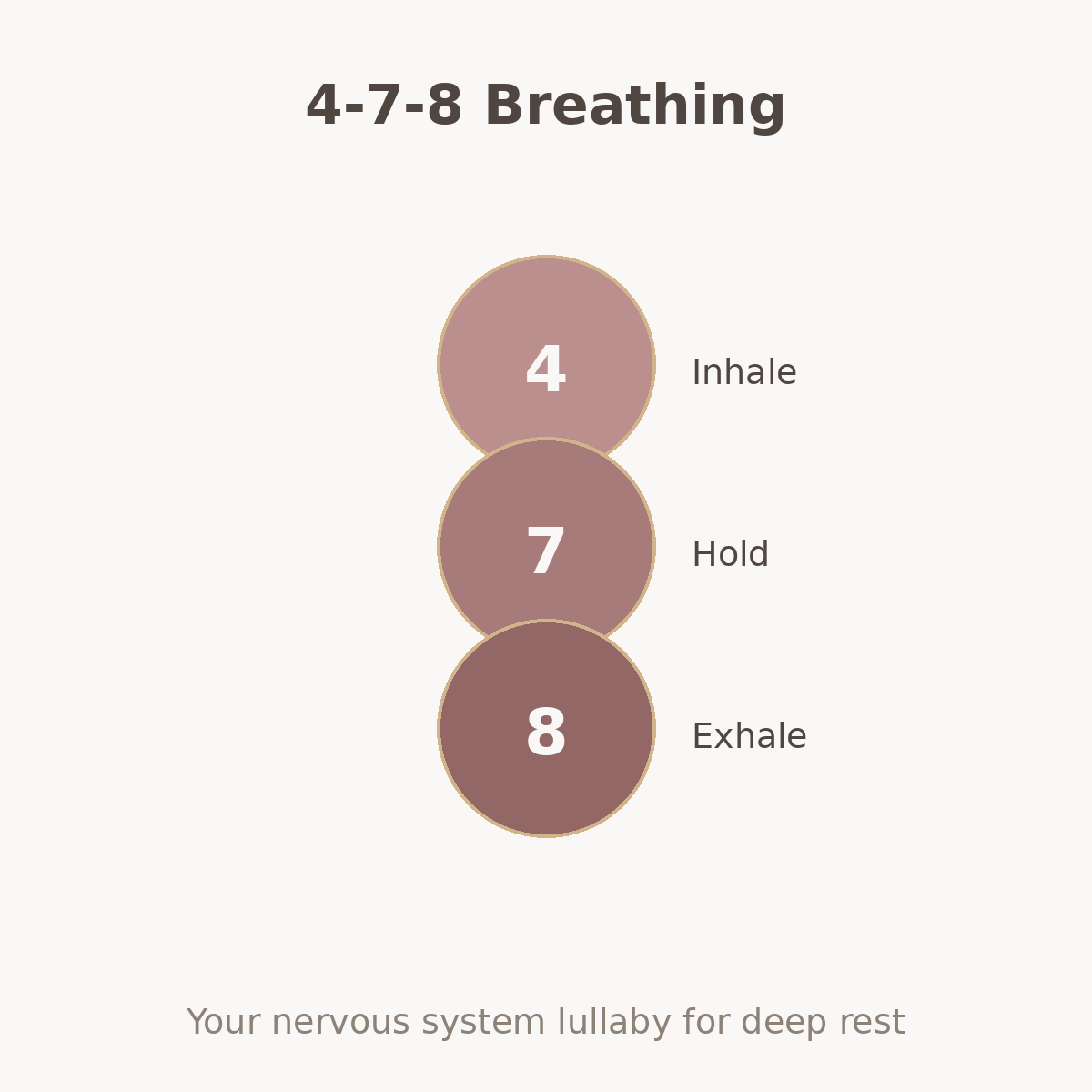
Your nervous system lullaby
How to practice it:
Inhale gently through your nose for 4.
Hold for 7.
Exhale slowly through your mouth for 8, like you're fogging a mirror.
Start with just 3 to 4 rounds, especially at night, and let that exhale feel like a long sigh of relief. Like your body finally has permission to let go.
When to reach for it:
Lights-out. Middle-of-the-night wake-ups. After a long day when your mind is looping and you just want to feel settled. This pattern is designed to down-regulate, so it's especially supportive when you want to move toward sleep or soften anxious spirals.
Why it helps:
The long exhale extends parasympathetic activation, and the 7-count hold builds a calm tolerance to stillness. Many women find it naturally sedating... not in a heavy, dull way, but like the system finally gets permission to rest deeply.
Common tender spots:
If you feel dizzy or lightheaded, you're pushing the 7 and 8 counts before your body is ready. Shorten them to 3-5-6 and build up gently over a week or two. Your body isn't "bad" at this. It's simply recalibrating. Meet yourself with gentleness and let the practice grow with you.
4-4-4 (The 444 Rule)
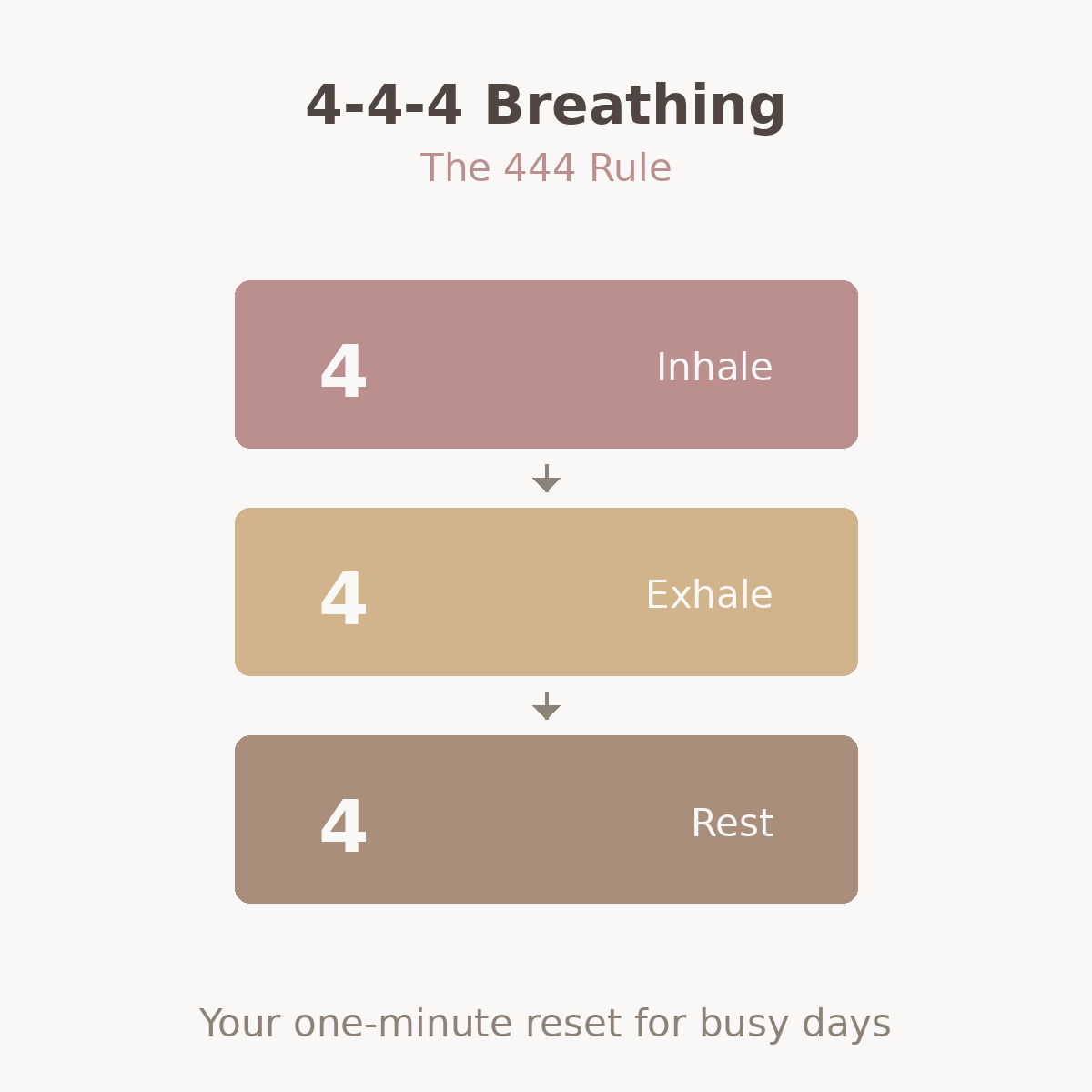
Your quick daytime reset
Think of 4-4-4 as a tiny reset button you can press in the middle of a busy day. A simple way of saying, "Pause. Breathe. Begin again."
How to practice it:
Inhale for 4.
Exhale for 4.
Rest for 4 before the next inhale.
Try this for just 1 to 3 minutes when you feel scattered or edgy, letting the breath stay soft and unforced.
When to reach for it:
Between emails. After school pick-up while you're waiting in the car. As a palate cleanser before making an important call. It slots easily into the little cracks of your day without needing you to stop everything.
Why it helps:
The light pause after your exhale creates a gentle calming effect without the heavier stillness of 4-7-8, so you can stabilise without getting drowsy. It's a beautiful choice when you want clarity and presence alongside calm.
Common tender spots:
Many people unconsciously breathe through their mouth quickly or hike their shoulders up. Keep it nasal, low, and smooth. Imagine the breath filling your belly and lower ribs first, like you're breathing into the base of your spine.
These techniques are powerful daily tools and they work even better when your nervous system has experienced a deeper reset. At Kora Wellness in Port Kembla, our 9D Breathwork sessions give your body a full, facilitated nervous system recalibration that makes your daily practice land more deeply. Explore our sessions here.
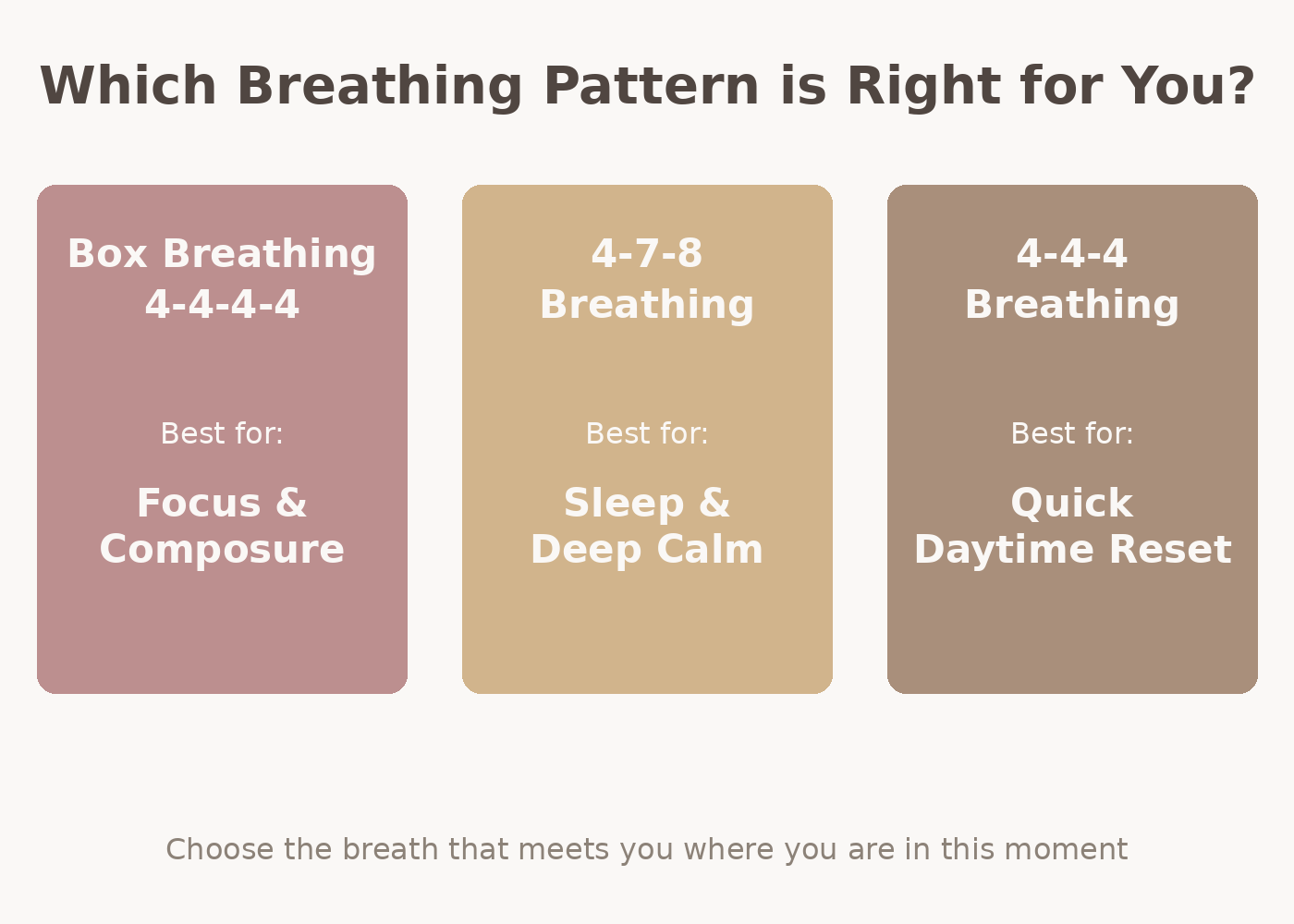
Which breathing technique is most powerful?
Here's the truth: "powerful" depends on what your body is whispering for in this moment.
For composure and clear focus under pressure: Box Breathing is your steadiest anchor.
For sleep, anxiety spirals, and evening wind-down: 4-7-8 often lands deepest.
For a crisp mental reset without feeling sleepy: 4-4-4 is simple and effective.
The most powerful technique is always the one you feel safe enough to return to, again and again. Consistency is what reshapes your baseline.
And when you pair any of these patterns with guided sound and loving facilitation, the results deepen. Because you're not just training your breath...you're training your body and subconscious together. Breath, sound and held space signal to your nervous system: You are safe. You can let go.
If you're curious about deeper support, our 9D Breathwork sessions near Wollongong weave conscious breathing into curated sound journeys and affirmations, so you can feel the drop more quickly and stay there long enough for your body to remember.
How to weave breathwork into your day (without adding pressure)
Your day doesn't need to change completely for you to become more regulated. Often it's the small moments of care... 60 seconds in the car, three slow breaths before bed... that quietly transform how you move through everything else.
Morning, post-school-drop: 4-4-4 for 2 minutes before you leave the kerb. Hands on the steering wheel, shoulders soft, eyes closed if it's safe. This sets a calm baseline without making you drowsy.
Pre-meeting or presentation: Box Breathing for 4 rounds in the lift or bathroom. Feel your feet on the floor, your spine lengthening, your voice steadying with each round.
Bedtime: 4-7-8 for 3 to 6 rounds once you're in bed. If you wake at 3am, do 2 more rounds without turning on the lights. Let the exhale be extra slow and heavy, like you're releasing the whole day.
For deeper, more consistent support, many of our clients combine a short daily practice with a weekly guided journey. Our studio in Port Kembla focuses on nervous system regulation and emotional release, using curated sound, subliminal affirmations, and noise-cancelling headsets so your system learns safety on a deeper, more embodied level. Over time, your body starts to remember this calm more easily... even in the middle of your everyday life.
““Often it’s the small moments of care - 60 seconds in the car, three slow breaths before bed - that quietly transform how you move through everything else.””
Can you overdo breathwork?
Yes, you can. And noticing the signs is an act of self-kindness, not failure.
⚠️ PAUSE IF YOU NOTICE:
Dizziness or lightheadedness
Tingling in hands or face
Chest tightness
Increased anxiety rather than calm
→ Return to natural breathing
→ Shorten the counts
→ Seek guidance if symptoms persist.
Signs include light-headedness, tingling in your hands or face, chest tightness, or feeling agitated rather than calm. These usually mean the pace is too forceful or the holds are too long for where your nervous system is right now.
The fix is gentle: slow down, shorten the counts, return to your natural breath, or pause completely and rest. Let your body lead. It knows what it needs.
If you have medical conditions or you're unsure what's right for you, please check with a health professional. And if you join us for a session, let us know beforehand so we can tailor the guidance and keep your system feeling safe.
Breathwork at Kora Wellness: Held, guided and trauma-informed
At Kora Wellness, we blend conscious connected breathing with sound design and subconscious reprogramming to help you regulate faster and integrate lasting change. Our approach is trauma-aware, heart-based, and welcoming. Beginners, busy minds, and tender hearts are all invited exactly as they are.
Many women report better sleep, lighter mornings, and a steadier mind after just a few guided sessions. Others notice more subtle shifts at first: reacting less to triggers, breathing deeper without thinking about it, feeling a little more like themselves again.
READY FOR MORE?
Explore our guided 9D Breathwork sessions where conscious breathing meets:
Curated sound frequencies
Subliminal affirmations
Trauma-informed facilitation
A held, safe space to fully let go.
Interested in a gentle introduction, or looking for a gift for someone who needs a reset?
You can book an intro to breathwork session in Port Kembla and arrive exactly as you are. No experience needed.
Planning a team offsite or Q1 wellbeing program?
We design practical onsite or online sessions that give employees tools they can use immediately at their desks and before sleep, while also creating a compassionate space to exhale together. Reach out for corporate availability.
Frequently Asked Questions
Do Navy SEALs really use box breathing?
Box-style breathing is commonly taught within military and tactical settings as a focus and arousal-regulation technique. Specific usage varies by unit, but it's widely associated with high-stress professions looking for composure under pressure.
What is the 4-7-8 rule for breathing?
It's a pattern of inhale for 4, hold for 7, exhale for 8. Designed to downshift the nervous system, it's especially helpful at bedtime or when anxious spirals feel overwhelming.
What is the 444 rule for breathing?
Inhale for 4, exhale for 4, rest for 4 between breaths. It's a quick, balanced reset that keeps you alert while helping you settle.
Which breathing technique is most powerful for stress?
It depends on what you're asking for. Box Breathing for composure and focus, 4-7-8 for sleep and deeper calm, 4-4-4 for a sharp daytime reset. The most powerful one is whichever practice you feel drawn to and safe with.
Can you overdo deep breathing?
Yes. If you feel dizzy, agitated, or tingly, reduce the intensity, shorten the counts, or pause. If you have health concerns, seek personalised guidance from a professional.
Your gentle next step
Short daily breaths create small, steady wins for your nervous system. Guided sessions create depth and momentum, especially when life has been heavy for a while.
Ready to build these into a fuller practice? Our beginner's guide to breathwork at home walks you through a complete 10-minute routine.
If you'd like support, you can explore breathwork for stress relief in Port Kembla on our site, or check dates and book a 9D breathwork session in Port Kembla to experience an immersive, guided journey in a safe, nurturing space.
For teams planning Q1 wellbeing initiatives, enquire about corporate programs and offsite sessions so your people can meet pressure with presence, compassion and a little more ease.
Your breath has been with you through every season. It's ready to help you come home to yourself, one gentle inhale and exhale at a time.
About the Author
Kora Wellness is the Illawarra's dedicated 9D breathwork studio, founded by Hayley Simpson and located at 43 Wentworth Street, Port Kembla NSW. Hayley is a certified 9D Breathwork facilitator and Master NLP Practitioner with a trauma-informed approach. Kora Wellness offers weekly group sessions, private 1:1 journeys, and online breathwork for clients across Wollongong, Shellharbour, Thirroul, Warilla and the broader Illawarra.
We'd love to hear from you
Which breathing pattern are you drawn to? Have you noticed one working better for you at certain times of day? Share in the comments below—we'd love to hear what your body is teaching you. 💛
