Can Breathwork really release trauma? Signs your body is letting go.
Published by Kora Wellness | Port Kembla, NSW | Serving Wollongong, Shellharbour, Thirroul, Warilla and the Illawarra
TLDR Summary: What you need to know about trauma release in Breathwork
Breathwork can support the release of stored tension and emotion by helping your nervous system feel safe enough to let go.
Signs of release include: tears, trembling, yawns, tingles, warmth or coolness, goosebumps, sighs and gentle vocal sounds.
Some sessions are active, others are quiet - both are powerful.
Practice at a frequency that feels supportive (daily or weekly during active healing, weekly for maintenance), prioritise safety and consult your healthcare provider when needed.
Aftercare is essential: Hydrate, journal, walk by the ocean, move gently, sleep well and give yourself space to integrate.
When you're ready to explore, we're here to hold a calm, compassionate space so your body can let go in its own time.
If you've ever felt tears arrive out of nowhere during breathwork, or waves of tingles moving through your arms then you're not alone.
Your body knows how to heal.
Sometimes it just needs the right conditions to let go of what it's been carrying.
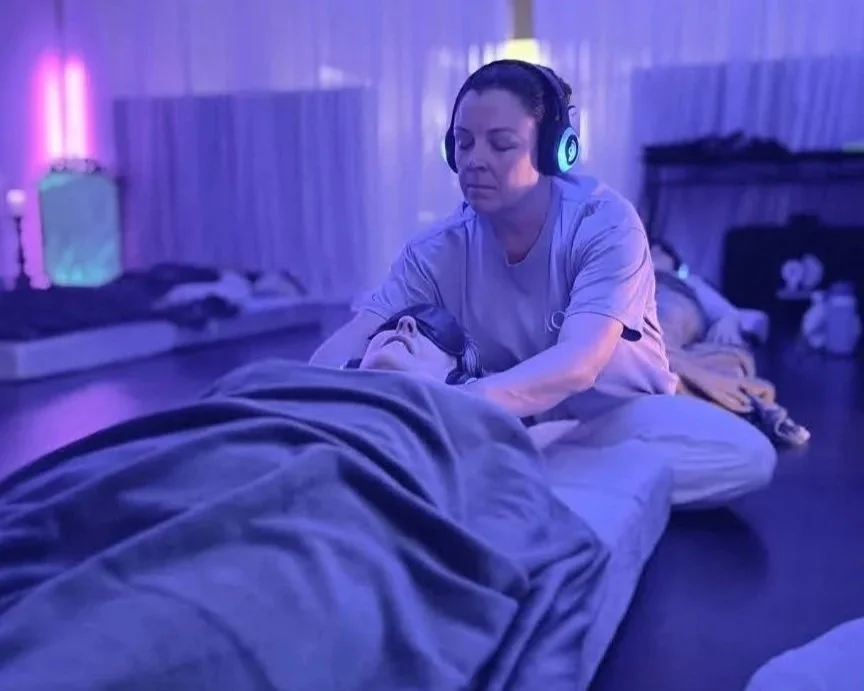
At Kora Wellness in Port Kembla, our 9D Breathwork journeys blend conscious connected breathing with immersive sound and gentle subconscious guidance to support safe, non-verbal emotional release. This isn't about forcing memories or reliving pain. It's about creating enough safety for your nervous system to complete what it couldn't finish before.
This guide walks you through what "release" actually looks like in your body, why it happens, when to pause and seek support and how to care for yourself afterward - especially during the full, tender season of the holidays.
Does Breathwork actually release trauma?
Here's what we know: your breath is one of the most direct ways to influence your nervous system.
When you breathe in specific rhythmic patterns - like the conscious connected breathing we use in 9D journeys - you're doing more than just moving air. You're signaling to your body that it's safe to soften the protective tension it's been holding.
How it works in your body
Rhythmic, circular breathing can:
Reduce muscular guarding and chronic tension
Increase body awareness and present-moment sensation
Shift your nervous system from fight-or-flight into ventral vagal (connection and safety)
Create space for emotions that have been held to move through.
Understanding the difference between activating and downregulating breathwork can help you choose the right session type for where you are in your healing.
Because when your body senses more safety, emotion and tension that have been stored can finally move. Many people describe this as release.
But here's what it's not: it's not about forcing memories, digging up the past or reliving pain. In our 9D journeys, release is non-verbal and guided entirely by your body's pace.
Sometimes it looks like a big cry. Sometimes it's a gentle softening, a sigh, or a quiet reset that happens beneath the surface.
All of it is valid.
Everyone's release looks different
Some sessions feel calm and spacious; like your nervous system is finally exhaling after holding its breath for years.
Others are more active; tears, shaking, vocal sounds, waves of emotion moving through.
Both can be healing.
Both are normal.
What matters is that you feel supported, informed and in choice the whole way through.
If anxiety is part of what you're carrying, our post on 9D Breathwork for Anxiety explores how the method works specifically for an anxious nervous system.
Physical signs your body is releasing
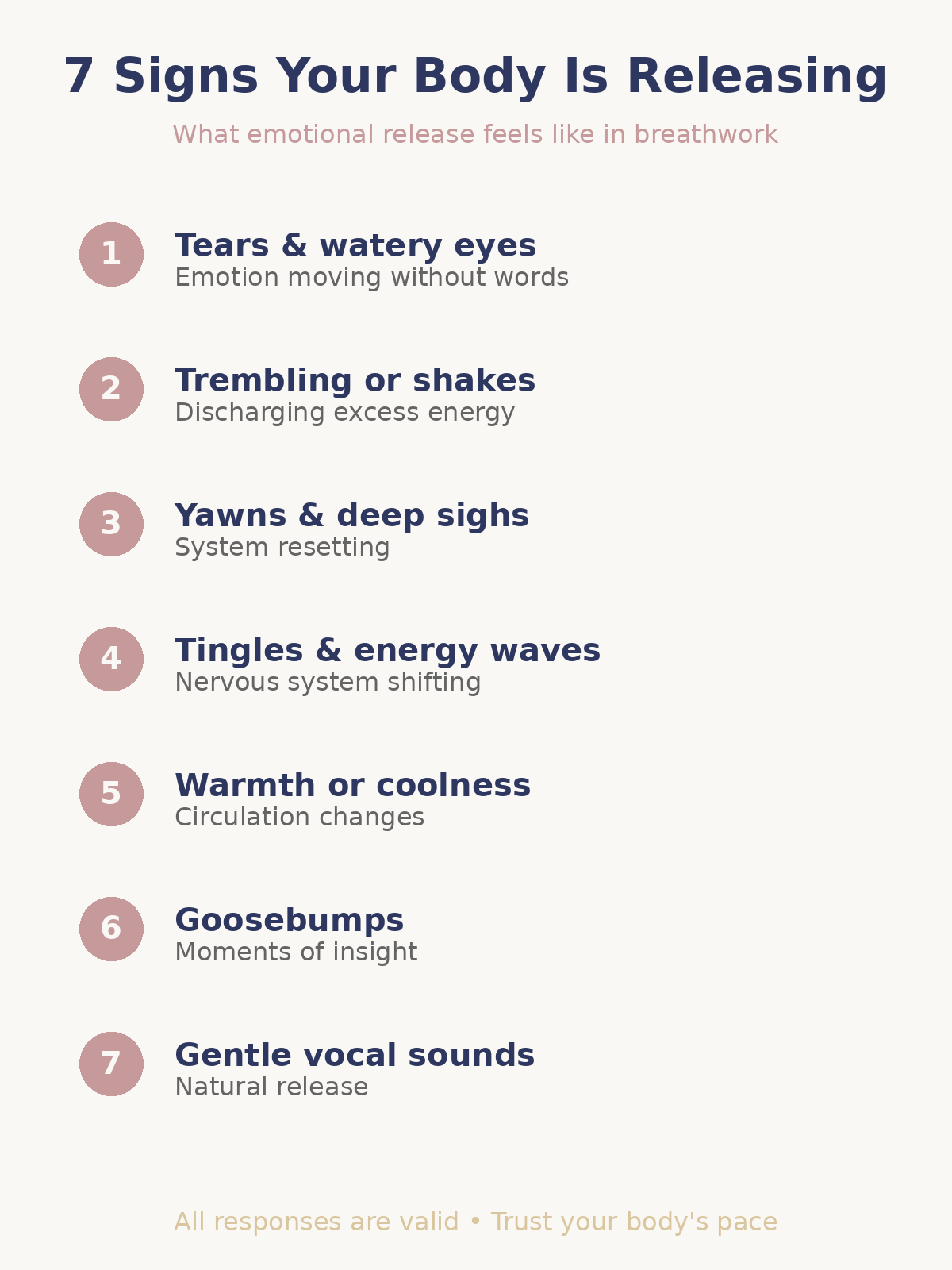
During breathwork, you may notice sensations you don't experience in daily life. These aren't problems, they're signs that your nervous system is processing and releasing stored tension.
7 signs of emotional release during breathwork
1. Tears or watery eyes
One of the most common signs. Your system is letting emotion move without needing words or a story. You might not even know why you're crying and that's okay. The body releases what it needs to.
2. Trembling or small shakes
Your body's way of discharging excess energy and completing stress responses that were frozen mid-cycle. This is called "neurogenic tremoring" and it's deeply healing. Think of it like shaking off tension the way animals do after a threat passes.
3. Yawns and sighs
Often accompanied by a deeper, easier breath afterward. This is your parasympathetic nervous system (rest and digest) coming online. Each yawn is a micro-reset.
4. Tingles, cramping or waves of energy
Especially in the hands, arms, face, or lips as carbon dioxide and oxygen levels shift. Your hands cramp into tiny little crab claws, this is called "tetany" and it's completely normal during breathwork. It usually softens within minutes or returning to nose breathing and signals that energy is rapidly moving within your body.
5. Warmth or coolness moving across the body
A natural response as circulation and nervous system tone change. You might feel heat in your chest, coolness in your hands, or waves of temperature moving through.
6. Goosebumps or gentle shivers
Often during moments of insight, relief or emotional opening. Sometimes called "frisson," this is your body's way of marking something significant.
7. Gentle vocal sounds
A hum, a whisper, a spontaneous sigh or groan. Allowing sound to move through you can help complete the release. There's no need to force it, if it wants to come, let it.
What If I Don't Feel Anything?
You might experience one of these, all of them, or none at all.
Stillness can be just as meaningful. Some of the deepest healing happens quietly, beneath conscious awareness. Your body is still integrating, rewiring and resetting - even if it doesn't feel dramatic.
If anything feels too intense at any point, you can always:
Slow your breath
Return to nasal breathing
Open your eyes
Take a rest
Let your facilitator know you need support.
Your pace is perfect.
Why these sensations arise in 9D Breathwork
Our 9D Breathwork method uses conscious connected breathing plus curated soundscapes, binaural beats, solfeggio frequencies and supportive hypnotic language.
These elements work together to:
Settle busy, looping mind states
Help you drop below the thinking mind into the body
Invite stored tension to process and move
Support your nervous system in completing stress cycles it previously paused.
The noise-cancelling headphones create a cocoon; a private, internal space where you feel safe enough to soften. When your system feels safe, it can finally complete stress cycles that were interrupted or frozen.
That completion is the simple essence of release.
If you're curious about what a session feels like in practice, explore our 9D Breathwork sessions near Wollongong to learn how the immersive audio supports your experience.
When NOT to do Breathwork (and who should avoid It)
Your safety comes first. Always.
Breathwork is powerful and for most people it's deeply supportive. But there are times when it's not appropriate and conditions where medical advice is essential before beginning.
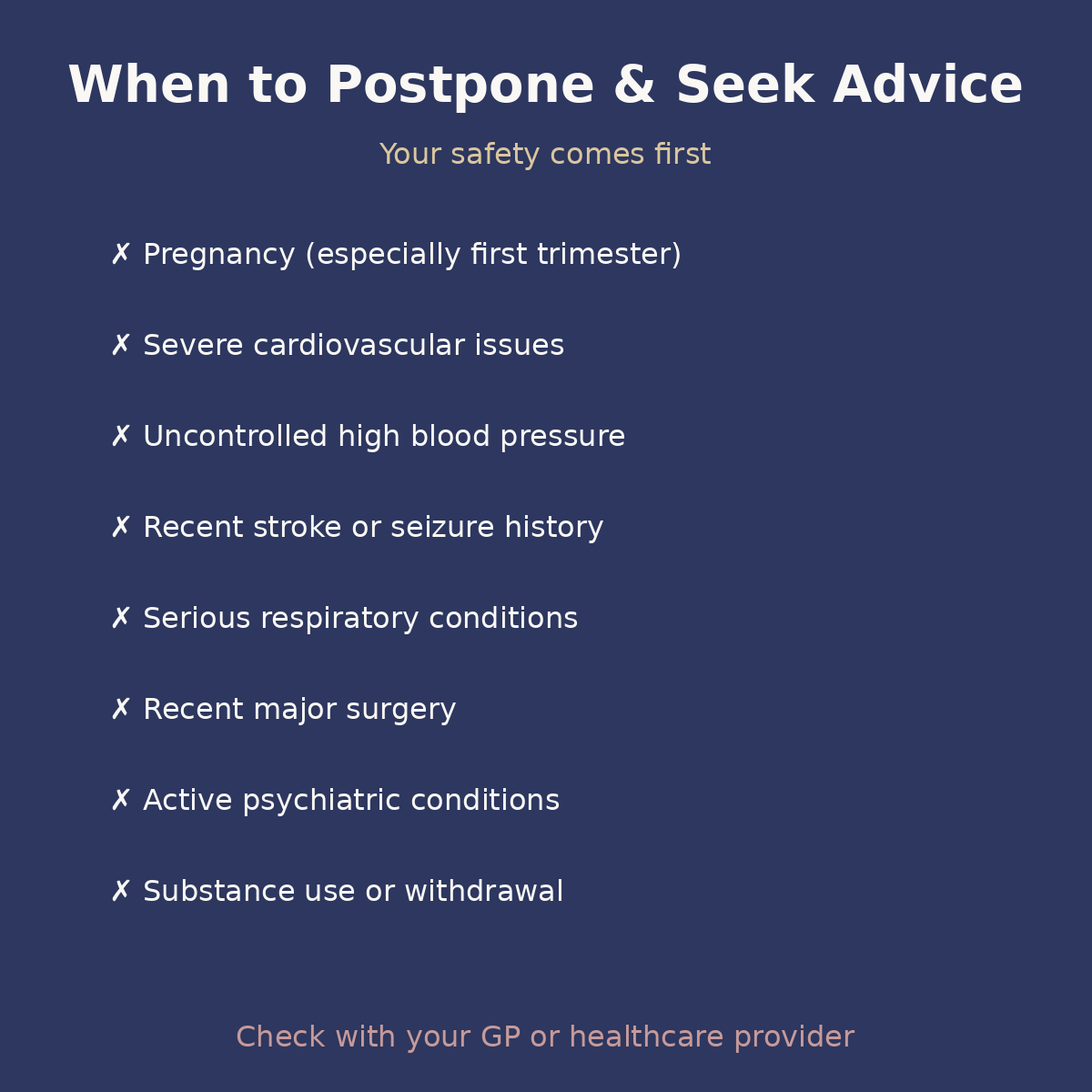
Please postpone and check with your GP if:
❌ You're pregnant (especially first trimester or high-risk pregnancies)
Breathwork can be very activating and isn't recommended during pregnancy without specific guidance from your doctor.
❌ You have severe cardiovascular issues
Including uncontrolled high blood pressure, recent heart attack, arrhythmia, or history of stroke.
❌ You have seizure history or epilepsy
The breathwork pattern and sound frequencies can sometimes trigger episodes in susceptible individuals.
❌ You have serious respiratory conditions
Where increased breathing rate or breath holds may not be advised (e.g., severe asthma, COPD).
❌ You've had recent major surgery
Or acute physical injury that could be aggravated by deep breathing or movement.
❌ You have significant psychiatric conditions
Where activating practices could destabilize your mood (e.g., active psychosis, severe bipolar disorder, recent psychiatric hospitalization).
❌ You're in active substance use or withdrawal
Your nervous system needs different support during this time.
❌ You've received medical advice to avoid breathwork
If your doctor has told you to avoid breath retention or activating practices, please honor that guidance.
We can modify for you
If you attend a session and need modifications, tell your facilitator beforehand. We can:
Adjust the breathing pattern to a gentler pace
Reduce intensity and keep to nasal breathing only
Guide a fully down-regulated journey focused on calm and rest
Offer a shorter session
Provide extra grounding and support
You always have full agency. This is your journey and we're here to support you exactly where you are.
How often should you practice Breathwork?
Consistency supports nervous system regulation.
Here's what we typically recommend:
During times of stress or active healing:
1 activated guided breathwork session per week helps maintain momentum and supports your system through big shifts
2-3 down-regulating guided breathwork sessions per week help your body to rest, repair and revive it’s energy and systems
This allows enough time for integration between sessions while keeping your nervous system actively rewiring
For maintenance and ongoing support:
Short daily or weekly sessions once you've established a baseline of regulation
This keeps you connected to your practice without overdoing it
At-home practice:
5-10 minutes of gentle breathwork 2-3 times per week can keep your nervous system steady between guided sessions
Simple practices like box breathing (4-4-4-4) or extended exhales work beautifully
If you're moving through big emotions:
Allow more integration time between deeper (activating) sessions
Choose extra rest, hydration, grounding practices and gentle movement
Prioritise down-regulating breathwork over activating breathwork
Your body will tell you when it's ready for the next session; trust that timing.
There's no "should" here. Your body's wisdom guides the pace.
Gentle aftercare for the holiday season
The end of the year can feel full - socially, emotionally, energetically. After a breathwork session (especially during this time), keep things simple and nourishing.
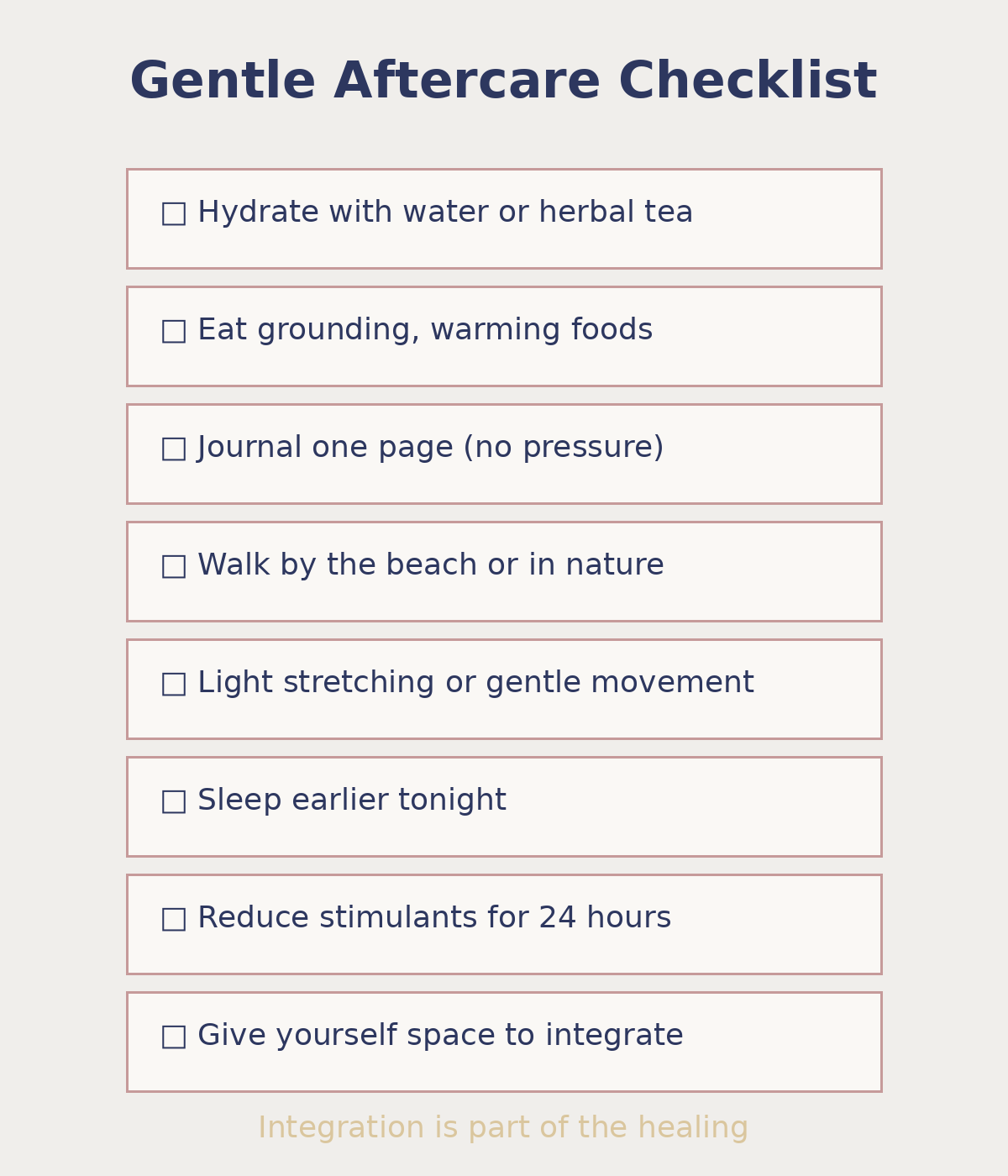
Your post-session aftercare checklist:
💧 Hydrate and eat grounding foods
Drink plenty of water or herbal tea. Eat warm, grounding foods; think soups, root vegetables (sweet potato, carrots, beetroot), simple proteins and anything that feels nourishing and easy to digest.
📝 Journal one page
About anything that surfaced. You don't have to make meaning or write a novel, just notice. What did you feel? What images came up? What sensation lingered? Let it be messy and unedited.
🌊 Walk on the beach
If you're on the South Coast, walk along the shoreline. Sand beneath your feet, salt air in your lungs and the steady rhythm of waves are instant nervous system regulation. If you're inland, walk barefoot on grass or find a quiet park.
🧘 Try light movement
A slow stretch, a gentle yoga flow, or a casual swim. Nothing intense, just enough to help the energy keep moving through your body.
😴 Sleep earlier that night
Dreams can be vivid after breathwork (this is normal and part of processing). Give yourself extra rest and let your system integrate while you sleep.
☕ Reduce stimulants for 24 hours
Go easy on coffee, alcohol, sugar and overly stimulating content (news, social media drama). Give your nervous system space to settle without extra input.
💬 Delay hard conversations
If possible, save difficult or activating conversations for a day or two later. You're tender and open - protect that space.
If heavy feelings linger
If overwhelming emotions persist or you feel destabilised after a session, reach out to your healthcare provider or contact us for support.
Integration is part of the work. You're not meant to do it alone.
What a session at Kora Wellness feels like
Here's what actually happens when you arrive for a session:
1. You'll settle in
Choose a cozy mat with a blanket, headphones, eye mask and pillow. The lighting is soft, the space is warm and you're invited to get as comfortable as possible.
2. We'll set a clear intention
What are you hoping for today? Rest? Release? Clarity? There's no wrong answer.
3. We'll teach you the breath pattern
You'll practice a few rounds together so your body understands the rhythm before the music begins.
4. You'll slip on high-quality, noise-cancelling headphones
This creates a private, internal experience - even in a group setting.
5. The journey begins
The music and guidance shape a safe arc from gentle grounding, through activation (if appropriate) and back to deep rest.
6. You choose your level of engagement
Your pace, your volume, whether you want optional touch support for grounding; it's all in your control.
7. Afterward, we offer tea and space
Optional sharing if you'd like, plus tailored aftercare recommendations so you leave feeling steady and resourced.
For workplace teams & End-of-Year gatherings
We create customised breathwork experiences for organizations focused on nervous system regulation, clarity and calm. If you're planning team wellbeing or a seasonal reset for your crew, explore our corporate breathwork sessions in Wollongong.
A kind reminder about expectations
There is no gold star for a big release.
You might cry one week and nap the next. You might feel waves of emotion or you might feel deeply calm. You might have a profound insight or you might just breathe and rest.
Healing is not linear.
Your body is wise. It will do what it needs, when it feels safe enough to do it. Some weeks that's a volcanic release. Other weeks it's a whisper-quiet integration happening beneath the surface.
Trust your pace. Ask questions. Take breaks.
You are in charge of your journey. We're just here to hold the space.
Ready to experience a safe, supported release?
If you're on the South Coast and seeking a nurturing space that prioritises safety, consent and non-verbal emotional release, we're here.
We offer:
1:1 private sessions for focused, personalised work
Small group journeys for community and shared healing
Corporate and team sessions for workplace wellbeing
Seasonal offerings and special events
We're located in Port Kembla with regular evening and weekend sessions. If you're planning a seasonal reset or a team wellbeing event before the new year, book your 9D Breathwork session and find a time that suits.
Frequently Asked Questions
Q: How do I know if breathwork is releasing trauma or just making me emotional?
A: Both can be true. Emotional release often feels spontaneous, non-verbal and moves through your body rather than staying stuck in your head. If you feel lighter, calmer or more spacious afterward - even if the session felt intense - that's a good sign it was productive release rather than re-traumatisation.
Q: Can breathwork re-traumatise me?
A: When practiced safely with trauma-informed facilitation, breathwork should not re-traumatise. We use pacing, choice and nervous system awareness to ensure you stay within your window of tolerance. If at any point you feel overwhelmed, you can slow down, stop, or modify the practice.
Q: What if I don't cry or feel anything during the session?
A: That's completely normal and valid. Release doesn't always look like tears or big emotions. Sometimes it's subtle; a softening in your shoulders, a deeper breath, a quiet sense of relief. Your body is still processing, even if it's not dramatic.
Q: How long does it take to feel the benefits?
A: Some people feel shifts immediately; lighter, calmer, more grounded. For others, the benefits unfold over days or weeks as integration happens. Consistency over time tends to create the most lasting change.
Q: Can I do breathwork if I'm in therapy?
A: Yes! Many people find breathwork complements talk therapy beautifully. Therapy helps you understand your patterns; breathwork helps your body release what words can't access. Just let your therapist know you're practicing breathwork.
About the Author
Kora Wellness is the Illawarra's dedicated 9D breathwork studio, founded by Hayley Simpson and located at 43 Wentworth Street, Port Kembla NSW. Hayley is a certified 9D Breathwork facilitator and Master NLP Practitioner with a trauma-informed approach. Kora Wellness offers weekly group sessions, private 1:1 journeys, and online breathwork for clients across Wollongong, Shellharbour, Thirroul, Warilla and the broader Illawarra.
